Why Healthcare Software Ages Faster Than Most Industries
Healthcare technology doesn’t get old because engineers build it poorly.
It gets old because the environment around it changes constantly.
New regulations.
New integrations.
New data standards.
New security expectations.
New patient-facing platforms.
Every few years, the healthcare system evolves, but the infrastructure underneath it rarely gets the chance to start fresh.
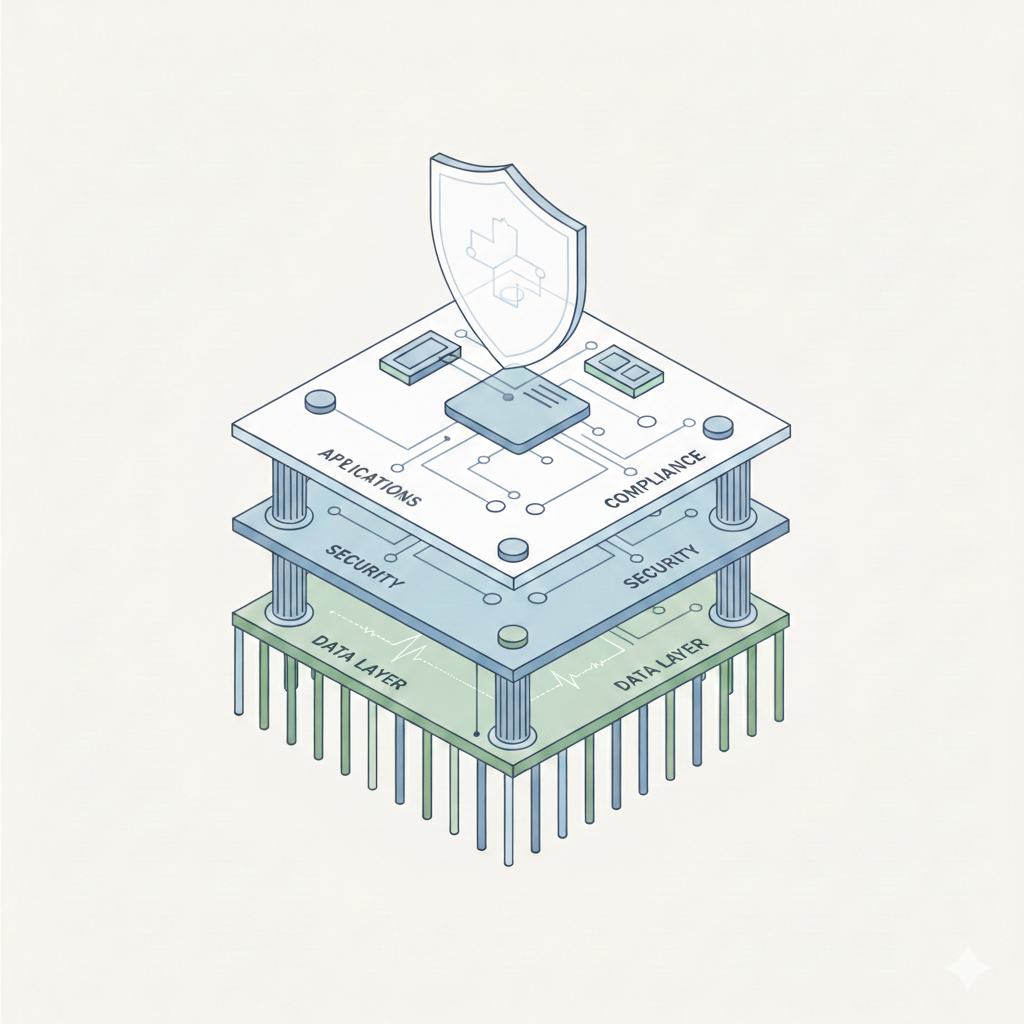
Instead, it accumulates layers.
And that’s why healthcare software often ages faster than software in almost any other industry.
The Cost of Running Live Infrastructure
In many industries, when a system becomes outdated, companies can rebuild it.
In healthcare, that option is rarely realistic.
Core platforms support patient records, billing, compliance reporting, clinical workflows, and regulatory audits. Taking those systems offline for a large-scale rebuild isn’t just expensive; it’s also operationally risky.
So healthcare organizations take a different path.
They modernize gradually.
A new integration here.
A data layer upgrade there.
An API wrapper around a legacy system.
Over time, the architecture becomes a mix of old and new technologies that must operate together seamlessly.

Integration Is the Real Complexity
Healthcare platforms rarely operate in isolation.
Even mid-sized organizations may need to integrate with:
- Electronic Medical Records (EMRs)
- Insurance and payer systems
- Laboratory networks
- Pharmacy platforms
- Government reporting systems
- Third-party digital health applications
Each integration adds operational value.
But it also adds technical surface area that must be maintained.
The more connections a system has, the harder it becomes to evolve the underlying platform without breaking something critical.
Regulation Slows Replacement
Regulation is often blamed for slow innovation in healthcare technology. In reality, it simply raises the cost of mistakes.
Replacing or heavily modifying a system that touches patient data requires extensive validation, testing, and compliance review. Even small changes can trigger new audit requirements.
As a result, healthcare companies tend to prefer controlled evolution over radical replacement.
The downside is that legacy systems remain in production longer than they would in other industries.
The Result: Continuous Modernization
Healthcare technology rarely goes through clean cycles of build → replace → rebuild.
Instead, it lives in a state of continuous modernization.
Teams are simultaneously:
- Maintaining legacy infrastructure
- Supporting critical integrations
- Adapting to new regulatory frameworks
- Developing new patient-facing capabilities
- All while ensuring uptime and security in an environment where failure can have serious consequences
This is what makes healthcare engineering uniquely demanding.
The Capacity Problem Behind Modernization
The challenge isn’t just technical complexity.
It’s that modernization work rarely arrives alone.
Engineering teams are expected to deliver new features, support integrations, address compliance updates, and maintain legacy systems at the same time.
When modernization becomes just another task on an already full roadmap, it moves slowly.
And the longer modernization is delayed, the more fragile the system becomes.
Reinforcing the Teams Behind the Systems
Healthcare companies that modernize successfully recognize an important reality: Legacy systems aren’t just technical problems. They’re capacity problems.
Modernization requires engineers who can focus on infrastructure, integrations, and system evolution without pulling the core team away from critical product work.
At DevRank, we support healthcare organizations by embedding senior engineers into existing teams, helping them move modernization work forward without disrupting live systems or slowing delivery.
The goal isn’t to replace what works. It’s to give teams the capacity to evolve it safely.
Healthcare Software is Carrying More Weight
Healthcare systems today are more connected, more regulated, and more critical than ever before.
The software supporting them isn’t aging because it’s poorly designed.
It’s aging because it’s being asked to carry more responsibility than most systems were ever built for.
Modernizing healthcare technology isn’t about starting over.
It’s about strengthening the teams responsible for keeping it running while carefully building what comes next.
At DevRank, we help healthcare organizations add the senior engineering capacity needed to modernize safely, support live systems, and keep critical infrastructure evolving without disruption.
Other Posts
Healthcare Teams Are Being Asked to Carry Too Much Operational Risk
+ Read Article
Async-First Is More Than Turning Off Slack
+ Read Article