As remote and distributed work models become the norm in engineering teams, one phrase gets thrown around more and more:
“We work async.”
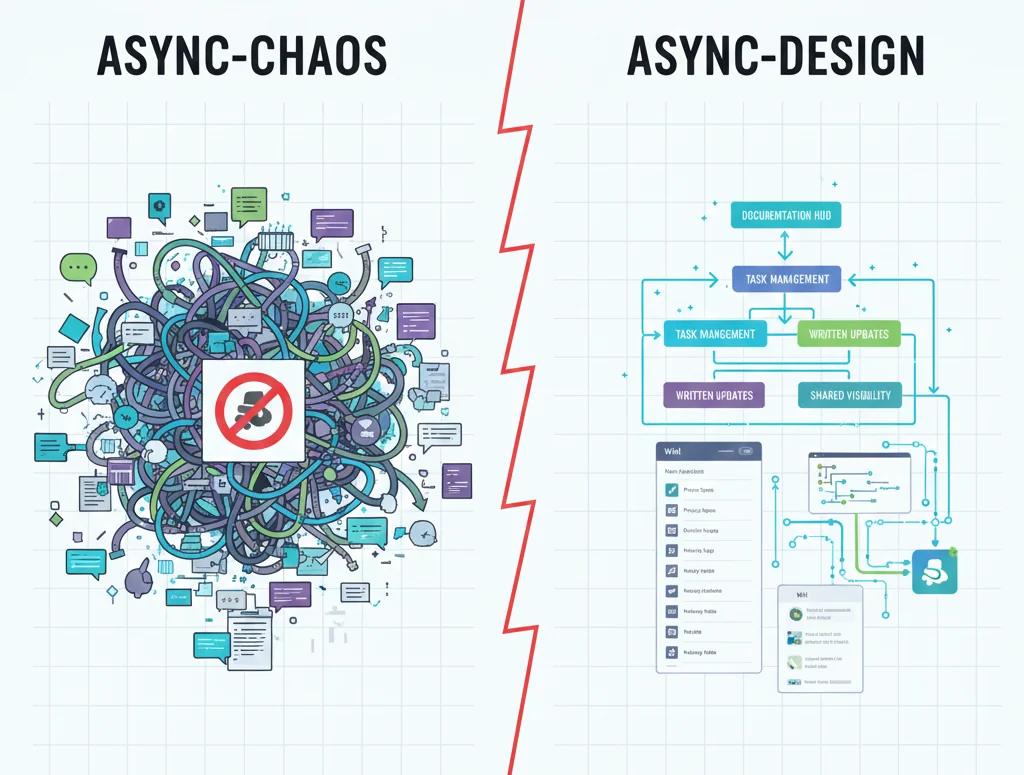
It sounds progressive. Efficient. Lean. But too often, “async” becomes shorthand for “we don’t really communicate.” The result? A significant disconnection between the intention and the execution, leading to friction in the process.
Async Is a Framework, Not a Vibe
Working asynchronously isn’t just about fewer meetings or silencing Slack notifications. It’s about replacing real-time collaboration with deliberate, structured communication.
That structure must be intentional:
- Clear expectations on response times
- Thoughtful documentation habits
- Shared visibility into task status
- Well-defined ownership of decisions and outcomes
Without it, async work quickly devolves into disjointed threads, late deliverables, and misunderstood priorities. Teams “look busy” but struggle to move in sync.
The Illusion of Autonomy
Async done right empowers.
Async done poorly isolates.
One of the biggest misconceptions in distributed teams is that autonomy means independence. But real autonomy, especially in async-first environments, requires alignment and clarity.
When engineers are left to interpret vague tickets or parse scattered messages across time zones, the cost is steep: duplicated work, dropped context, and lost momentum.
Structure Is a Productivity Tool
The most effective distributed teams don’t just reduce meetings. They replace them with documented processes, shared rituals, and structured async practices.
That might include:
- Weekly written updates instead of status calls
- Clear PR templates to speed up reviews
- Async standups via Slack or Notion
- Time-zone-aware handoffs
- Shared visibility into blockers and priorities
These aren’t just project management hygiene; they’re what allows distributed teams to operate at scale without burning out or breaking down.
At DevRank, our nearshore engineers aren’t just hired for technical ability. They’re trained to integrate into structured async environments. They document well, communicate clearly, and align quickly—reducing the friction that often slows down distributed collaboration.
Whether you're already async-first or moving in that direction, we help you expand your team without creating noise.
Async Isn’t Absence. It’s Design
As teams grow across time zones, async work becomes inevitable. But success isn’t about going silent; it’s about getting intentional.
Without structure, async becomes chaos. With the right systems (and the right partners), it becomes your team’s superpower.
At DevRank, we help teams become async-first without losing clarity—so you can scale across time zones with confidence, not confusion.