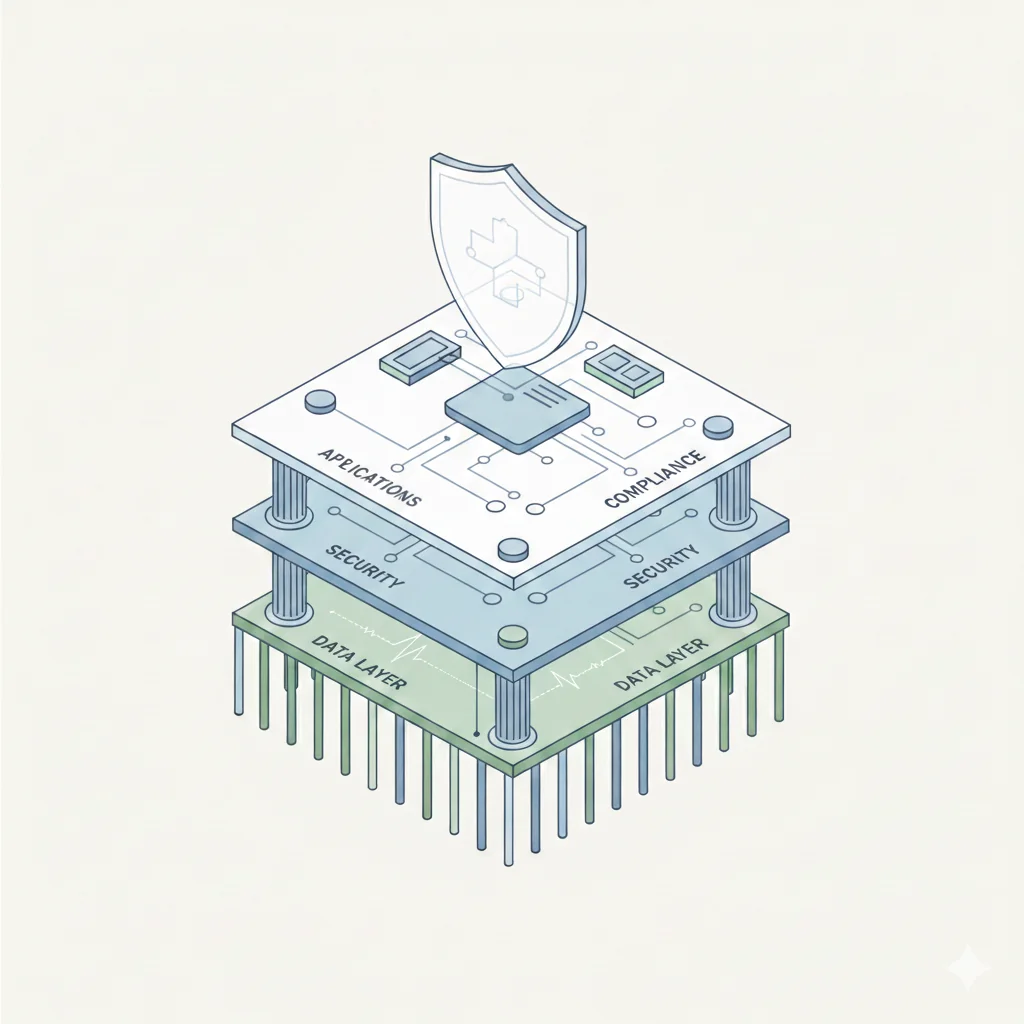
In healthcare technology, risk doesn’t live in one place.
It’s spread across compliance requirements, legacy systems, patient data, uptime expectations, cybersecurity threats, and increasingly complex product roadmaps. Yet in many organizations, all of that operational risk ends up concentrated in the hands of too few people.
This isn’t a performance issue.
It’s a structural one.
When Risk Becomes a Staffing Problem
Healthcare engineering teams are often asked to do it all at once:
- Maintain and modernize legacy platforms.
- Stay compliant with evolving regulations.
- Support security and privacy requirements.
- Enable new product initiatives and integrations.
- All while keeping systems stable and available.
On paper, this looks manageable. In practice, it creates a fragile setup where a small group of engineers carries disproportionate responsibility. When even one person leaves, burns out, or gets pulled into firefighting mode, delivery slows and risk exposure increases.
This is how operational risk quietly accumulates. Not because teams are careless, but because they’re overloaded.
The Hidden Cost of Concentrated Responsibility
When too much responsibility sits with too few engineers, several things happen:
- Knowledge becomes siloed.
- Preventive work gets deprioritized in favor of urgent fixes.
- Security and compliance tasks become reactive instead of proactive.
- Teams operate in survival mode, not improvement mode.
Over time, this leads to delayed initiatives, quality erosion, and higher exposure… Precisely the outcomes healthcare organizations are trying to avoid.
Ironically, many companies accept this risk because hiring feels slow, expensive, or legally complex. So they stretch existing teams further, hoping to “get through this phase.”
But phases in healthcare rarely end. They compound.
Distributing Risk Is a Leadership Decision
Reducing operational risk isn’t only about better tooling or stricter processes. It’s about how responsibility is distributed across the team.
Organizations that scale more safely don’t eliminate risk, they spread it. They add senior capacity where pressure is highest, reinforce teams during peak demand, and avoid single points of failure in critical systems.
This is where staff augmentation plays a strategic role.
Not as a replacement for internal teams.
Not as a short-term patch.
But as a way to rebalance load and responsibility without slowing execution.
Where Staff Augmentation Fits
At DevRank, we work with healthcare companies that recognize this pattern early. They don’t wait for burnout, incidents, or missed milestones to act.
By embedding senior engineers into existing teams, they’re able to:
- Reduce dependency on a handful of individuals
- Create redundancy in critical knowledge areas
- Keep compliance, security, and delivery moving in parallel
- Scale capacity without long hiring or legal cycles
The result isn’t just more output. It’s lower operational risk and more resilient teams.
Sustainable Healthcare Tech Requires Structural Support
Healthcare environments are inherently complex. Expecting small, static teams to absorb ever-growing operational demands isn’t sustainable, and it isn’t fair to the people doing the work.
The question isn’t whether your teams are capable. It’s whether they’re being asked to carry more risk than the system allows.
Distributing responsibility, reinforcing capacity, and planning for resilience are foundational to scaling healthcare technology responsibly.
At DevRank, we help healthcare teams add senior capacity where it matters most so risk is shared, delivery stays steady, and growth doesn’t come at the cost of stability.